
Future Homes Standard confirmed: Solar PV becomes core requirement for new homes
Solar PV expected on most new homes, with ~40% coverage of ground floor area defined as a non-tradeable requirement
Clear timeline confirmed, with new regulations from March 2027 and full compliance required by March 2028
Industry shifts from planning to delivery, as housebuilders integrate low-carbon heating, improved fabric, and on-site renewable generation
UPOWA ready to support housebuilders with compliant, cost-effective solar delivery at pace and scale
New Government regulations define 40% solar benchmark and set a clear timeline for industry transition to low-carbon, energy-generating homes
The UK Government has today confirmed the Future Homes Standard, marking a major step forward in the transition to zero-carbon-ready housing.
The new standards set the trajectory for homes that are designed to operate efficiently as the UK electricity grid continues to decarbonise. Future homes will be cheaper to run, powered by low-carbon heating, and built to higher energy efficiency standards through tighter design requirements.
For housebuilders, the announcement provides long-awaited clarity on how future developments must be designed, specified and delivered.
Solar PV confirmed as a core requirement
A key outcome of the announcement is the role of solar photovoltaic (PV) systems in enabling compliance. Under the new standard:
Solar PV is expected on most new homes
A benchmark of approximately 40% coverage of ground floor area has been defined
Solar is now a functional requirement and cannot be traded off against other energy measures
Reduced provision must be justified based on site constraints
Buildings over 18 metres may be exempt
This confirms that new homes will be expected to generate their own electricity as part of a wider system of low-carbon technologies.
From policy to practical delivery

“The Future Homes Standard announcement removes the uncertainty. Solar PV is now expected on most new homes, with a clear benchmark of around 40% coverage, and crucially, it’s now a functional requirement.
The conversation has shifted from ‘if’ to ‘how’. With firm timelines in place, the industry must now move quickly from strategy to delivery.”
Clear timeline for implementation
The Future Homes Standard will be introduced through updated Part L regulations:
From March 2027: New regulations apply to developments submitting for building control
From March 2028: All new homes must comply, with limited transitional arrangements
This establishes a clear deadline for housebuilders to review and update current specifications and delivery models.
A system-based approach to compliance
The Future Homes Standard introduces a fully integrated approach to energy performance, combining:
Low-carbon heating systems, with heat pumps expected to be the primary solution
Improved building fabric, including tighter airtightness requirements
On-site renewable generation, led by solar PV
Fossil fuel heating systems such as gas and oil boilers will no longer meet the required performance standards, effectively accelerating the transition to electrified homes.

What this means for housebuilders
While the direction of travel has been widely anticipated, today’s announcement signals a shift from planning to delivery. Housebuilders must now address several practical challenges:
Designing for solar and energy systems at the concept stage
Achieving consistent PV coverage across varied house types and sites
Navigating new compliance methodologies, including SAP 10.3 and the future Home Energy Model (HEM)
Delivering at scale without impacting programme timelines or cost
In addition, compliance requirements are becoming more stringent at an individual dwelling level, particularly for housing types where performance can no longer be averaged.
Key questions from the industry
Will all new homes require solar PV?
In most cases, yes. Solar PV is expected as a default requirement, with approximately 40% coverage of the ground floor area. Where this coverage cannot be achieved due to site constraints, a reduced system may be accepted with appropriate justification.
Are heat pumps mandatory?
Not explicitly, but in practice, they will be the most viable solution. The new standard effectively rules out higher-carbon heating systems, such as gas and oil boilers.
Will building fabric requirements change?
Backstop U-values remain similar, but overall performance expectations are tighter. Improved airtightness and updated ventilation assumptions will require careful coordination in design.
What compliance methods will be used?
Initially, developments will be assessed using SAP 10.3, with a transition to the Home Energy Model (HEM) expected in due course.
Is there flexibility in how compliance is achieved?
Some flexibility remains, but key elements such as solar PV are now non-tradeable, meaning they must be delivered unless constraints can be clearly demonstrated.
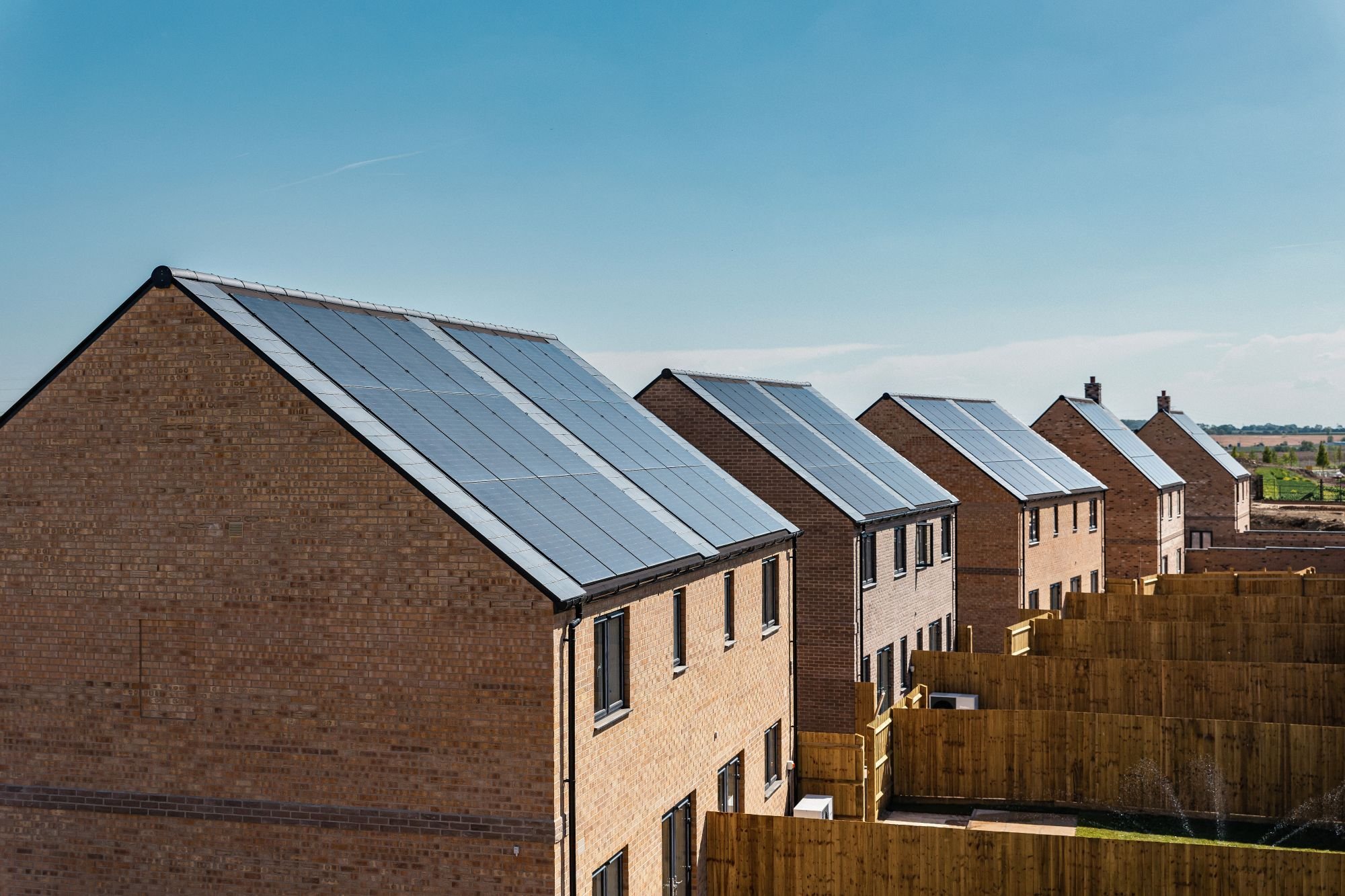
Supporting housebuilders at scale
UPOWA, a leading UK solar PV installation partner for housebuilders, is already supporting developers to integrate solar into new-build housing projects across the UK.
By working as an end-to-end delivery partner from early-stage consultancy and design through to installation and aftercare, UPOWA helps housebuilders:
Reduce compliance risk
Protect build programmes
Deliver consistent quality at scale
Ensure solar is integrated effectively from day one
If you’re planning new developments under the Future Homes Standard, now is the time to act. Talk to our expert team to see how UPOWA can help you integrate solar PV into your new homes, delivering compliant, future-ready projects safely, on time, and at scale.